Start Your Home Practice Today with 12 Simple Yoga Asanas
Start Your Home Practice With 12 Yoga Poses

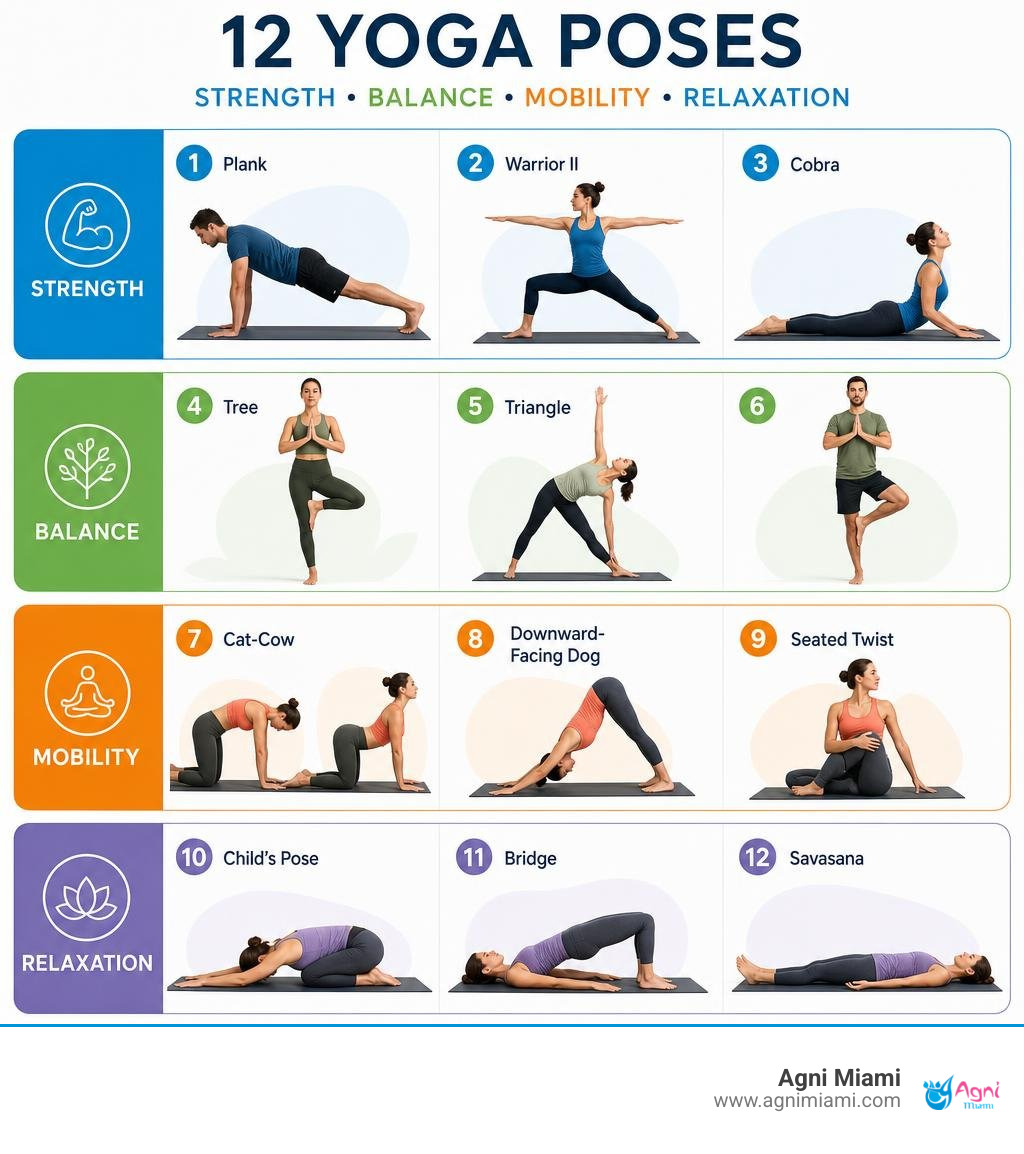
A balanced home practice can start with these 12 yoga poses: Mountain, Warrior II, Triangle, Tree, Cat-Cow, Downward-Facing Dog, Plank, Cobra, Child's Pose, Seated Twist, Bridge, and Savasana.
Together, they train the basics: posture, strength, balance, mobility, and rest. Start by holding most poses for 3 to 5 slow breaths. Use a wall, chair, blocks, or a strap when that helps you move with control. Nothing should cause sharp pain, numbness, or strain.
For busy professionals, this is a practical full-body reset. The standing poses build stability after long hours at a desk. The floor poses open the back, hips, and chest. The final resting pose gives your nervous system time to settle.
Yoga is not about forcing your body into a shape. It is about pairing steady movement with steady breathing. A short, consistent practice can support flexibility, stress relief, balance, and recovery alongside more intense training.
The Master Guide to 12 Yoga Poses for Full-Body Longevity
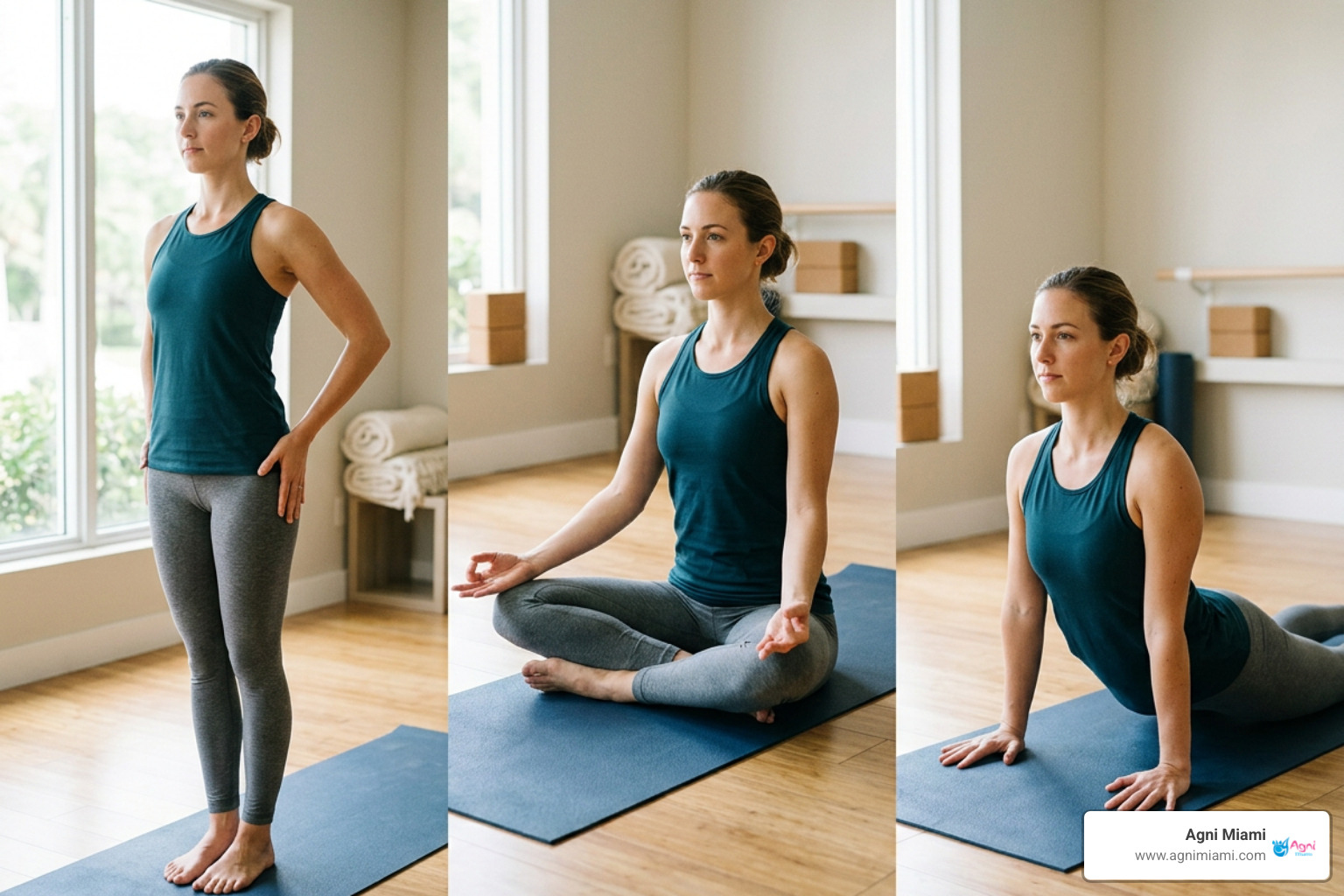
Mastering foundational asanas involves understanding joint mechanics, safe muscular engagement, and the traditional Sanskrit lineage that guides each shape. When we practice with anatomical precision, these postures protect our joints while challenging our muscular and skeletal systems.
Standing Foundations: Mountain, Warrior II, Triangle, and Tree
Standing postures teach us how to ground into the earth while maintaining upward lift through the spine. They build muscular endurance throughout the lower body and reinforce functional hip and ankle stability.
- Mountain Pose (Tadasana)
- Movement Mechanics: Stand with feet hip-width apart or big toes touching. Ground down through the four corners of your feet (inner/outer ball, inner/outer heel). Engage your quadriceps to lift the kneecaps slightly, draw the navel gently toward the spine, soften the shoulders down the back, and reach the crown of the head skyward.
- Benefits & Alignment: Tadasana establishes baseline postural awareness. Avoid hyperextending your knees or tilting the pelvis excessively forward. Think of lifting your arches like a tiny internal elevator.
- Warrior II (Virabhadrasana II)
- Movement Mechanics: Step your feet about 3.5 to 4 feet apart. Turn your front foot to point straight forward and angle the back foot slightly inward (about 90 degrees). Bend your front knee until it stacks directly over the front ankle. Extend your arms parallel to the floor, gazing softly over the front fingertips.
- Benefits & Alignment: Builds dynamic quad strength and opens the adductors. Ensure the front knee tracks toward the second toe rather than collapsing inward. For additional context on how foundational standing shapes set up your practice, consult this 12 Basic Yoga Poses for Beginners: Expert Guide 2026.
- Extended Triangle (Utthita Trikonasana)
- Movement Mechanics: From a wide stance, straighten both legs without locking the joints. Hinge sideways over the front hip, reaching the front hand toward a block outside your shin, while reaching the top arm vertically toward the ceiling.
- Benefits & Alignment: Opens the hamstrings, lateral torso, and groin. Avoid collapsing the rib cage forward; rotate the chest open toward the ceiling.
- Tree Pose (Vrksasana)
- Movement Mechanics: Shift weight onto your standing leg. Place the sole of the opposite foot onto the inner calf or inner thigh (never directly against the knee joint). Press the foot and standing leg firmly against one another. Bring hands to prayer at the heart center or extend them overhead.
- Benefits & Alignment: Recruits the gluteus medius, trains ankle proprioception, and activates core stabilizers. Use a wall for balance support if you experience any instability.
Dynamic Floor Work: Cat-Cow, Downward-Facing Dog, Plank, and Cobra
Transitioning onto the floor introduces progressive weight-bearing for the wrists, shoulders, and spine, encouraging full articulation and core integration.
- Cat-Cow (Marjaryasana-Bitilasana)
- Movement Mechanics: Begin on hands and knees with wrists beneath shoulders and knees beneath hips. On an inhale (Cow), drop the belly, broaden through the collarbones, and gaze forward. On an exhale (Cat), press firmly through the palms, dome the upper back, and tuck the chin to the chest.
- Benefits & Alignment: Synchronizes breath with spinal flexion and extension, lubricating intervertebral discs and easing muscular tension across the lumbar spine.
- Downward-Facing Dog (Adho Mukha Svanasana)
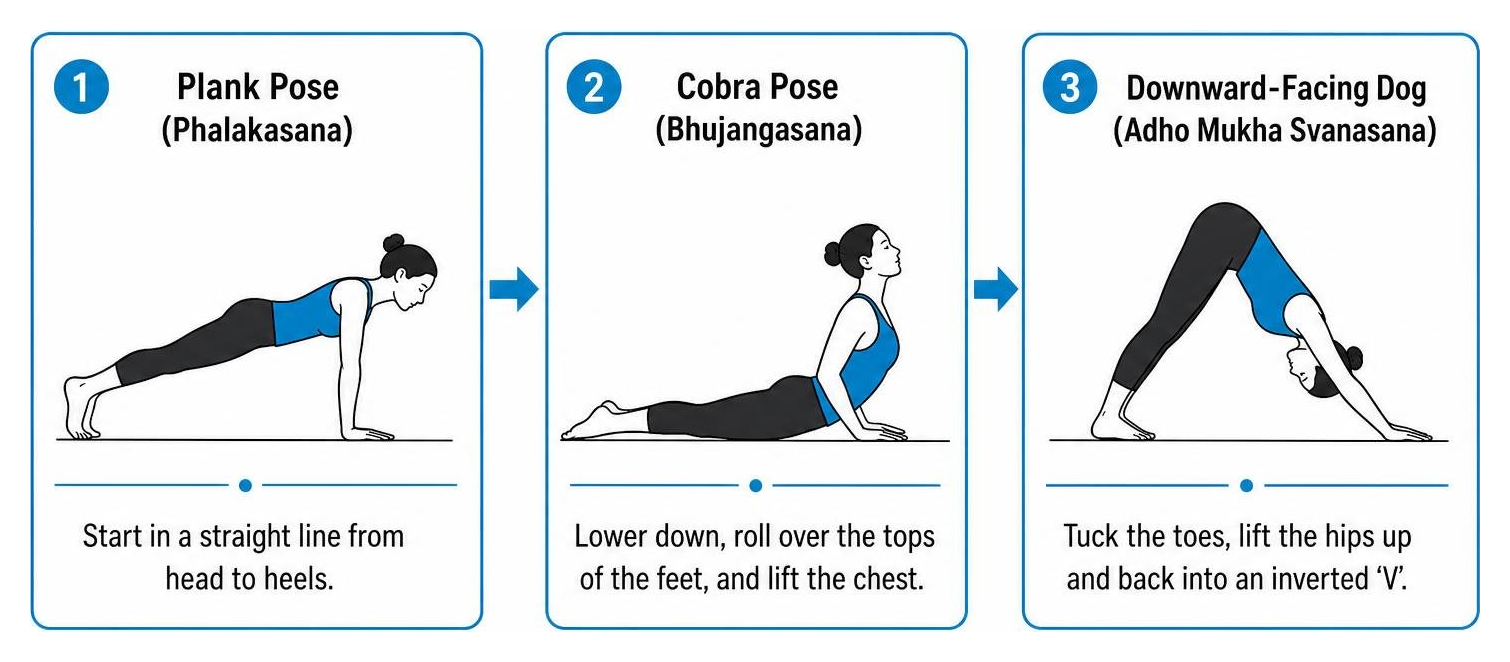
- Movement Mechanics: From all fours, tuck the toes and lift the hips up and back, forming an inverted 'V'. Spread the fingers wide, press evenly through the palms, rotate the upper arms outward to broaden the shoulder blades, and release the heels gently toward the floor.
- Benefits & Alignment: Stretches the calves, hamstrings, and shoulders while strengthening the serratus anterior. Keep a micro-bend in the knees if your hamstrings are tight to prioritize a straight spine.
- Plank Pose (Phalakasana)
- Movement Mechanics: Step the feet back so the body forms a rigid, straight line from heels to crown. Stack shoulders over wrists, engage the abdominals, firm the glutes, and push the floor away to keep the shoulder blades active.
- Benefits & Alignment: Develops isometric core and shoulder endurance. To explore how this posture integrates into dynamic vinyasa transitions, review this step-by-step breakdown of Sun Salutation: the 12 postures step by step.
- Cobra Pose (Bhujangasana)
- Movement Mechanics: Lower prone onto the mat. Place hands under the shoulders with elbows hugging the ribs. Press the tops of the feet firmly into the floor. Inhale to lift the chest off the mat using back extensor strength, keeping the neck long and shoulders down.
- Benefits & Alignment: Strengthens the erector spinae and expands the anterior chest wall without compressing the lumbar vertebrae.
Restorative Integration: Child's Pose, Seated Twist, Bridge, and Savasana
Closing postures emphasize spinal decompression, pelvic realignment, and parasympathetic nervous system activation.
- Child’s Pose (Balasana)
- Movement Mechanics: Kneel on the floor, bring big toes together, and separate knees wide. Fold the torso over the thighs and rest the forehead on the mat or a block with arms extended forward or draped back alongside the legs.
- Benefits & Alignment: Gently decompresses the lower back, releases tension across the glutes, and signals the nervous system to down-regulate.
- Half Lord of the Fishes (Ardha Matsyendrasana)
- Movement Mechanics: Sit upright with legs extended. Bend the right knee and place the right foot flat outside the left thigh. Inhale to lengthen the spine; exhale to wrap the left arm around the right knee and twist gently to the right, placing the right fingertips behind the sacrum.
- Benefits & Alignment: Stimulates thoracic rotation, opens the outer hips, and stretches the piriformis. Always elongate the spine before initiating the twist.
- Bridge Pose (Setu Bandha Sarvangasana)
- Movement Mechanics: Lie supine with knees bent and feet flat on the floor hip-width apart, heels beneath knees. Press down through the feet and arms to lift the hips toward the ceiling. Interlace hands underneath the back or keep arms flat beside the hips.
- Benefits & Alignment: Activates the posterior chain (glutes and hamstrings) while creating a gentle anterior chest stretch. Keep thighs parallel; avoid letting the knees splay outward.
- Corpse Pose (Savasana)
- Movement Mechanics: Lie flat on the back with legs extended naturally and arms resting alongside the torso, palms turned upward. Close the eyes and allow the breath to return to its effortless rhythm.
- Benefits & Alignment: Essential for physiological assimilation, neuro-muscular recovery, and down-regulating stress hormones.
Science-Backed Benefits Across Traditions: From Sivananda to Bone Density Protocols
The physical practice of yoga spans several traditions, each utilizing distinct sequences of 12 postures to achieve specific physiological outcomes.
| Yoga Tradition / Protocol | Primary Objective | Key Asanas Included | Ideal Candidate |
|---|---|---|---|
| Classical Sivananda | Energetic balancing & chakra alignment | Headstand, Shoulderstand, Plough, Fish, Cobra, Forward Bend | General wellness practitioners seeking meditative depth |
| Modern Functional Flow | Mobility, core strength, cardiovascular pacing | Mountain, Warrior II, Triangle, Plank, Cobra, Down Dog | Beginners, active fitness enthusiasts, desk workers |
| Dr. Loren Fishman Osteoporosis Protocol | Bone mineral density (BMD) stimulation via mechanical loading | Tree, Triangle, Warrior II, Side Angle, Locust, Bridge | Individuals with osteopenia, osteoporosis, or age-related bone loss |
Why Practicing 12 Yoga Poses Daily Boosts Bone Mineral Density
Bone is dynamic tissue that remodels in response to mechanical strain, a biological principle described by Wolff’s Law. When muscles contract against bone during sustained postures, they generate mechanical tension that triggers osteocytes—the master signaling cells in bone matrix—to activate osteoblasts, prompting new bone mineral synthesis.
Research demonstrates that mechanical stress held for as little as 12 seconds can elevate bone-building cellular markers. In a long-term clinical study of 227 participants (average age 68, with 83% diagnosed with osteopenia or osteoporosis), practicing a targeted 12-pose sequence daily for two years yielded statistically significant gains in bone mineral density across the lumbar spine and femoral neck (Lu et al., 2016). Crucially, over more than 90,000 cumulative practice hours, zero yoga-related fractures or serious injuries were documented (Lu et al., 2016).
Sustained isometric holds also encourage the release of PGC-1α, an anti-inflammatory coactivator protein that mitigates low-grade chronic inflammation—a known contributor to bone degradation. To learn how short daily routines support structural health as we age, review this 12-Minute Daily Yoga Routine: Quick Full-Body Flow for Busy People - Yoga For Seniors.
Adapting the 12 Yoga Poses for Osteoporosis and Chronic Neck Relief
Modifying postures ensures that individuals with compromised bone mineral density or cervical spine discomfort can practice safely.
- Osteoporosis Adaptations: Avoid rapid spinal flexion (rounding the back) or aggressive twisting. In poses like Triangle or Seated Twists, emphasize a straight spine, using blocks to elevate the hands and limiting spinal rotation to safe, neutral ranges.
- Cervical Spine and Neck Relief: Neck pain often stems from postural strain, forward-head posture, and tight upper trapezius muscles. A 2019 review highlighted yoga as an effective complementary therapy for improving neck mobility and mood. Furthermore, a 2024 comparative study found that yoga reduced chronic neck pain intensity and improved functional mobility more effectively than Pilates, Tai Chi, or Qigong.
- Safe Cervical Alignment: In postures such as Extended Triangle or Warrior II, gaze forward or down toward the floor rather than up at the ceiling if you experience cervical discomfort.
How to Sequence, Breathe, and Use Props for Safe Practice

A safe home practice relies on deliberate progression, controlled respiration, and proper equipment support.
Breath Control (Pranayama) and Optimal Hold Times
Breathing is the operating system of yoga. Coordinating movement with intentional breath activates the parasympathetic branch of the autonomic nervous system, regulating blood pressure and muscle tone.
- Ujjayi Pranayama (Ocean Breath): Inhale and exhale smoothly through the nose while slightly constricting the back of the throat. This creates a gentle, audible sound, warms internal tissues, and provides an anchor for focus.
- Hold Times:
- Beginners & General Mobility: Hold poses for 3 to 5 full breath cycles (approximately 20–30 seconds).
- Bone-Building Protocol: Hold isometric postures for a minimum of 30 seconds to deliver sufficient osteogenic stimulus to target sites.
- Restorative Shapes (Child’s Pose, Savasana): Hold for 1 to 5 minutes to allow deep fascial and neurological down-regulation.
Essential Props and Common Alignment Pitfalls to Avoid
Props are not training wheels; they are alignment tools that allow bodies of all mobility levels to experience the full benefits of an asana safely.
- Yoga Blocks: Place blocks under your hands in Triangle Pose or Downward Dog to maintain length in the spine and avoid collapsing the torso.
- Yoga Straps: Use a strap around the feet during seated forward folds to prevent rounding through the lumbar spine.
- Wall Support: Utilize a wall for stability during Tree Pose or Warrior variations to build balance confidence without risking a fall.
If you want structured guidance, real-time corrections, or a supportive atmosphere, explore our full spectrum of studio classes to refine your technique alongside certified instructors.
Frequently Asked Questions About Home Yoga Practice
Can beginners practice these postures daily?
Yes. Gentle daily movement reinforces neuromuscular pathways and joint range of motion without overtaxing recovery systems. Beginners should keep holds moderate (3 to 5 breaths) and prioritize smooth, comfortable alignment.
How long should I hold each posture for maximum benefit?
For general mobility and flexibility, holding a pose for 20 to 30 seconds (around 4 to 6 steady breaths) is effective. For bone-density improvements, holding poses for at least 30 seconds applies the sustained mechanical tension necessary to activate bone-remodeling cells.
Is yoga more effective than Pilates for relieving neck tension?
Recent clinical research from 2024 showed that yoga led to greater reductions in neck pain intensity and functional limitation when compared to Pilates, Tai Chi, and Qigong. Yoga's combination of gentle thoracic mobility, conscious breath control, and nervous system down-regulation offers comprehensive relief for tension-related neck discomfort.
Conclusion
Building a consistent home practice with these foundational postures creates a sustainable foundation for lifelong movement, strength, and stress resilience. By moving with awareness, honoring your body's daily boundaries, and matching breath to movement, you cultivate structural strength from the inside out.
At Agni Miami, we believe sustainable wellness thrives at the intersection of active movement and deep recovery. Whether on your mat at home or inside our studio, consistent, mindful practice is your most powerful tool for long-term vitality.
References
Lu YH, Rosner B, Chang G, Fishman LM. "Twelve-Minute Daily Yoga Regimen Reverses Osteoporotic Bone Loss.." Topics in geriatric rehabilitation, 2016. PMCID PMC4851231.